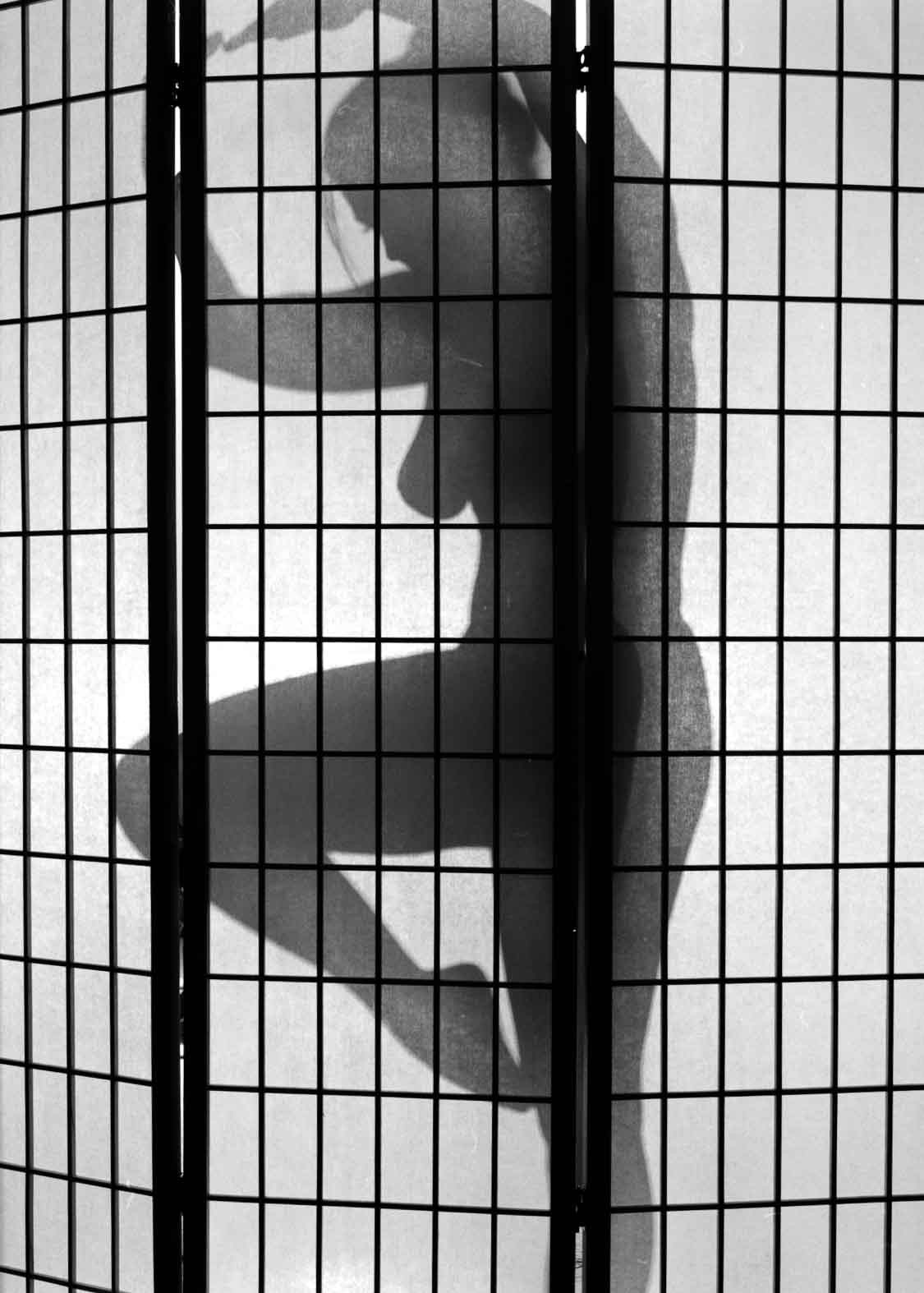
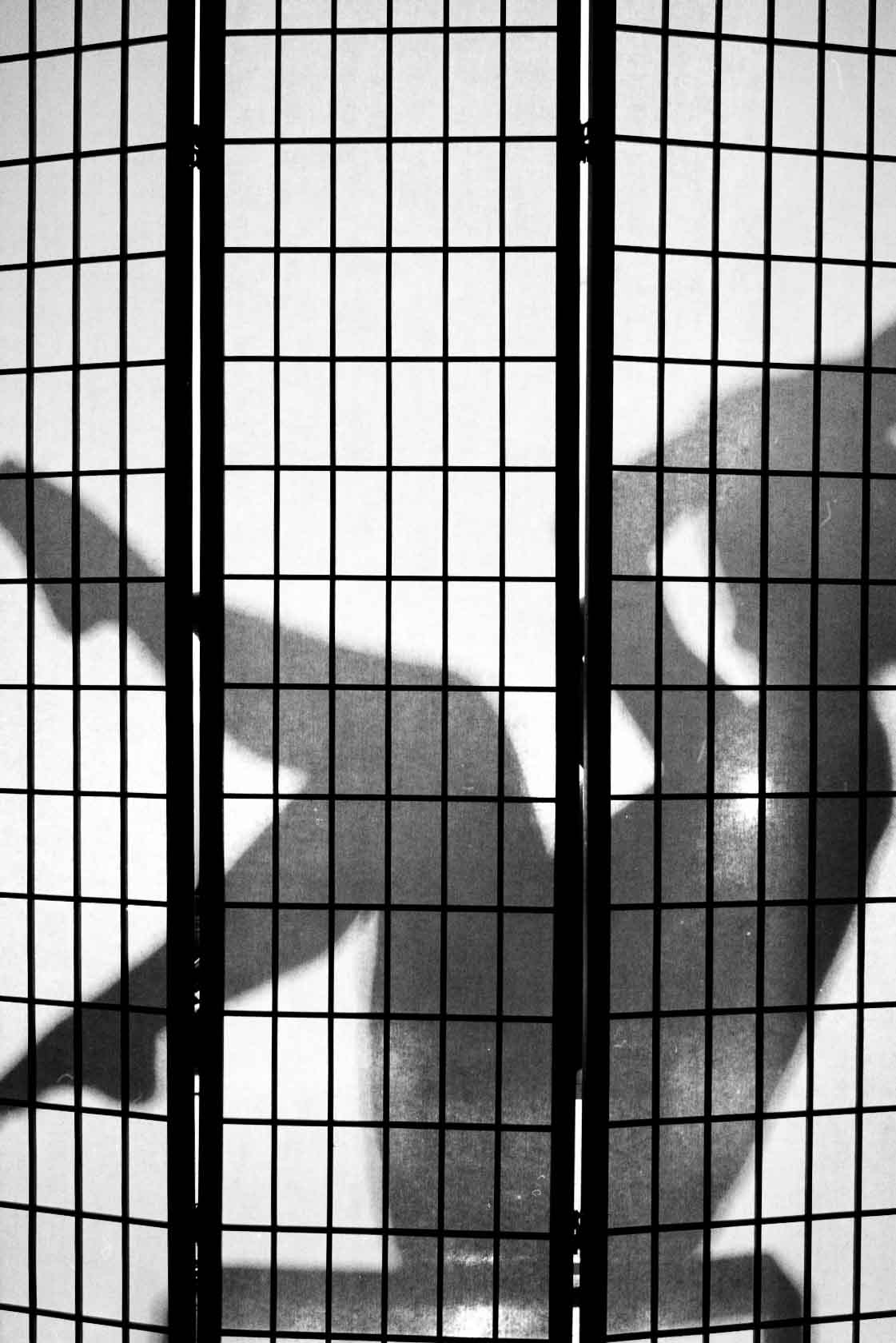
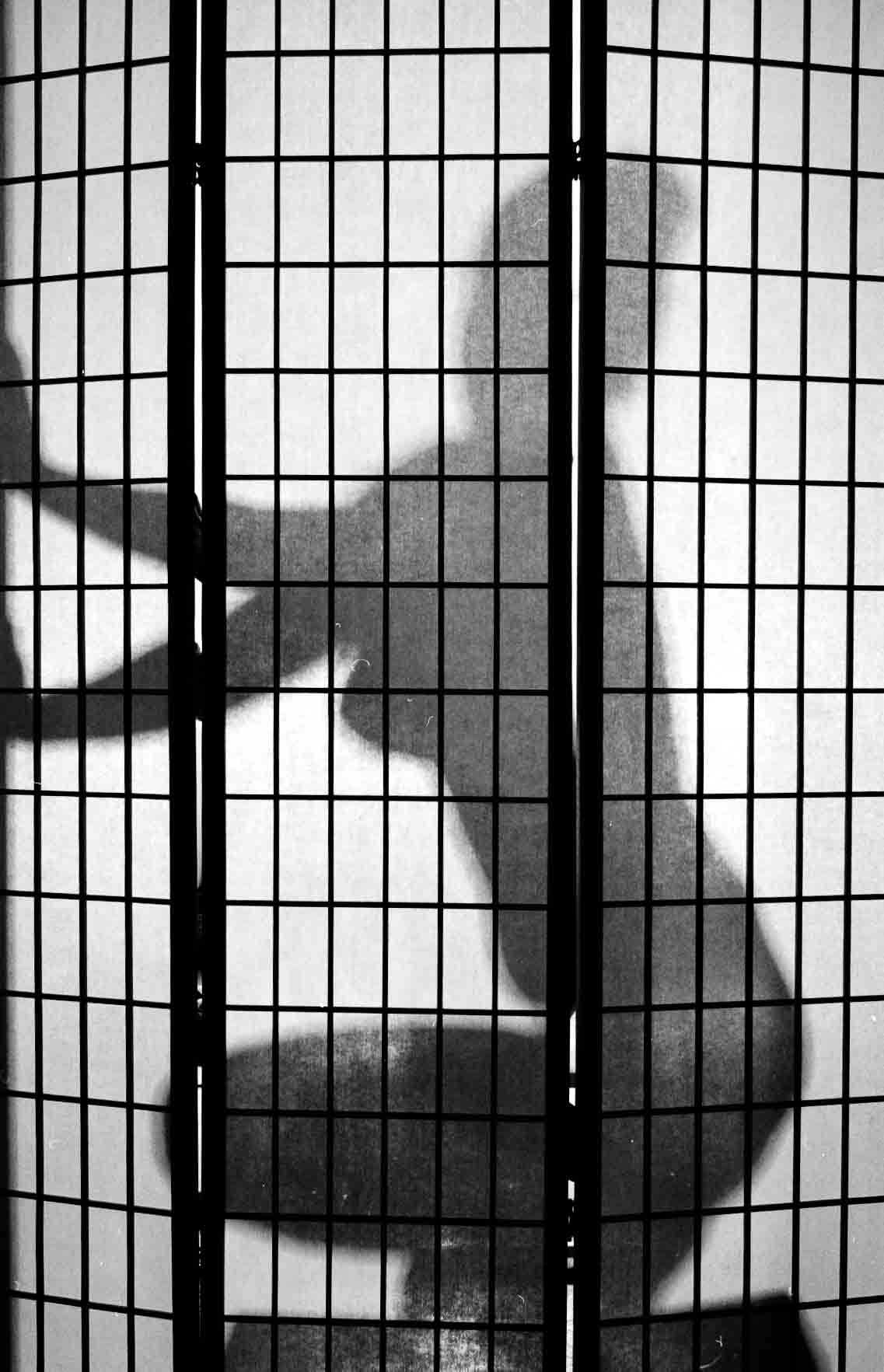
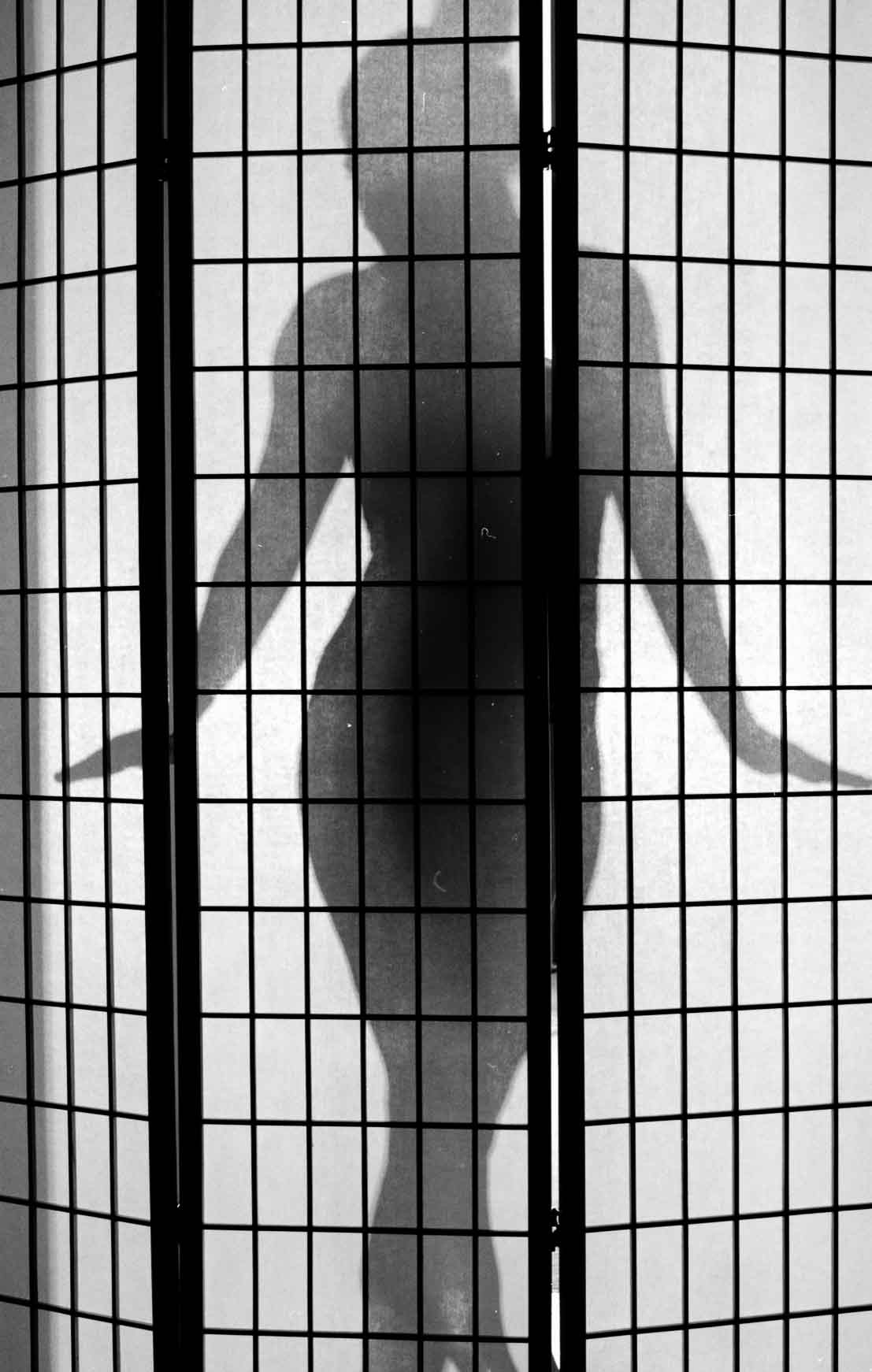
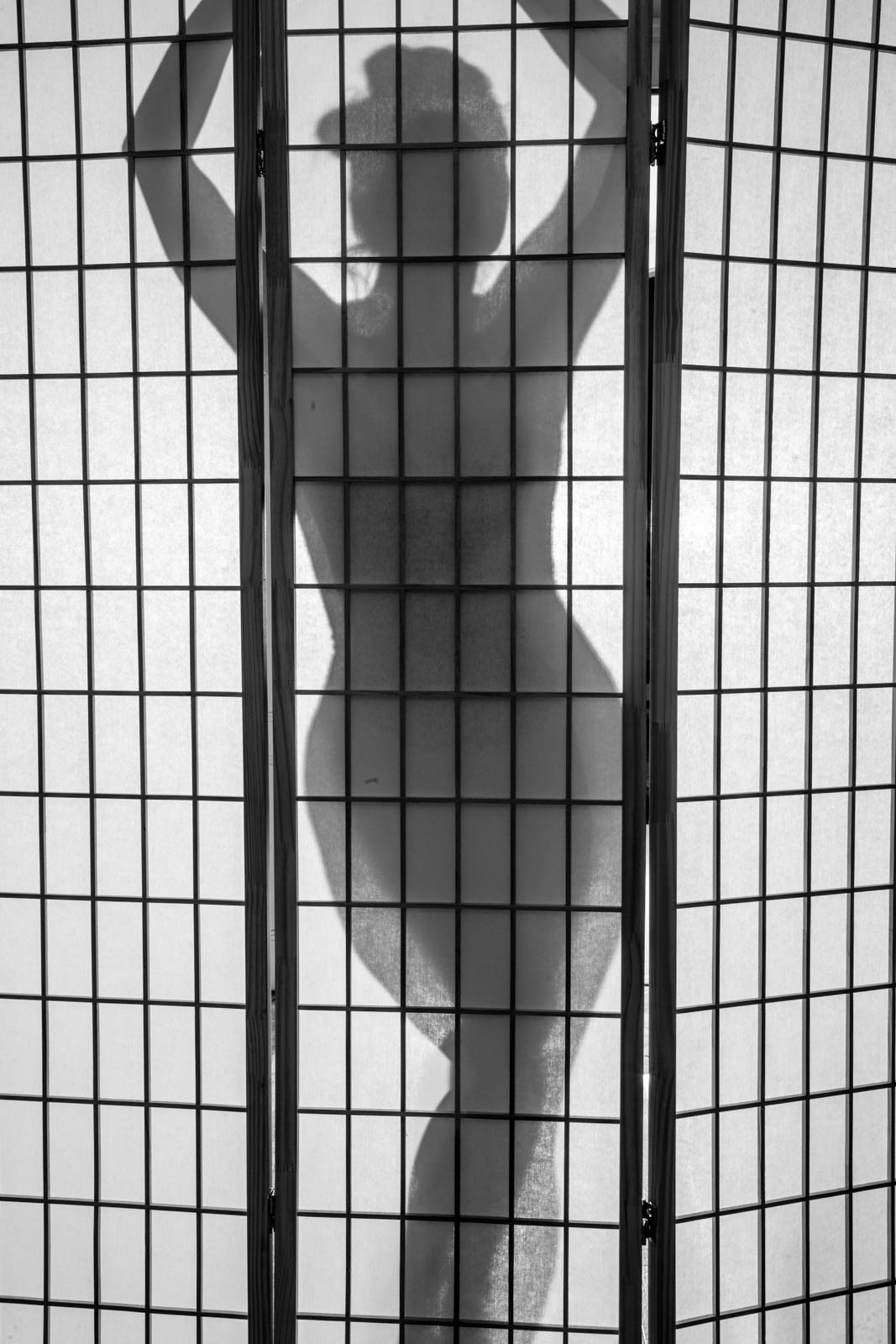
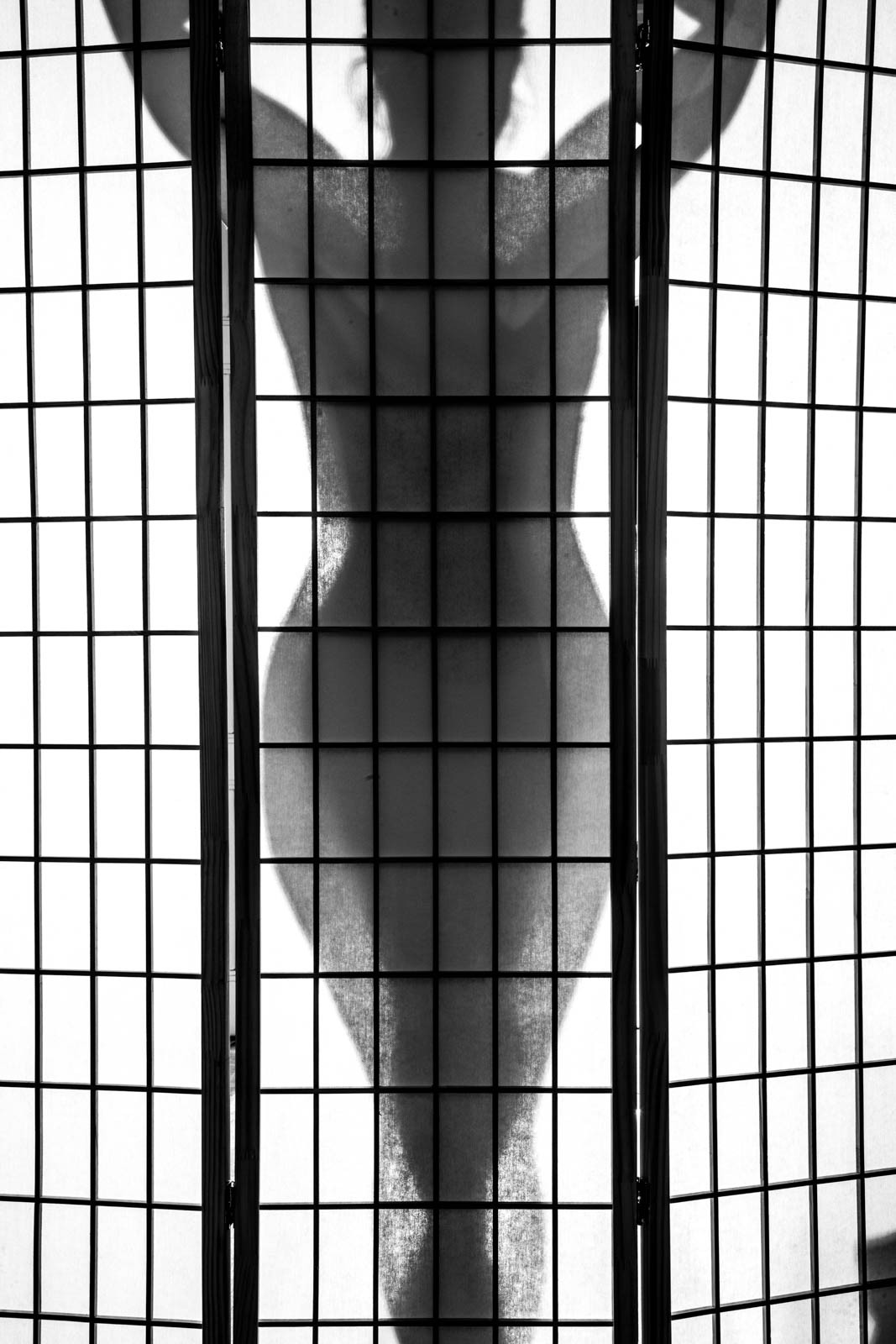
You can create several distinct shadows using only a single light source. The key is not the lamp itself, but the environment in which the light is allowed to travel and reflect. A reflective space amplifies and redirects light naturally: a small white room works well, as does a simple enclosure built from lightweight styrofoam panels (approximately 2 × 4 × 2 meters).
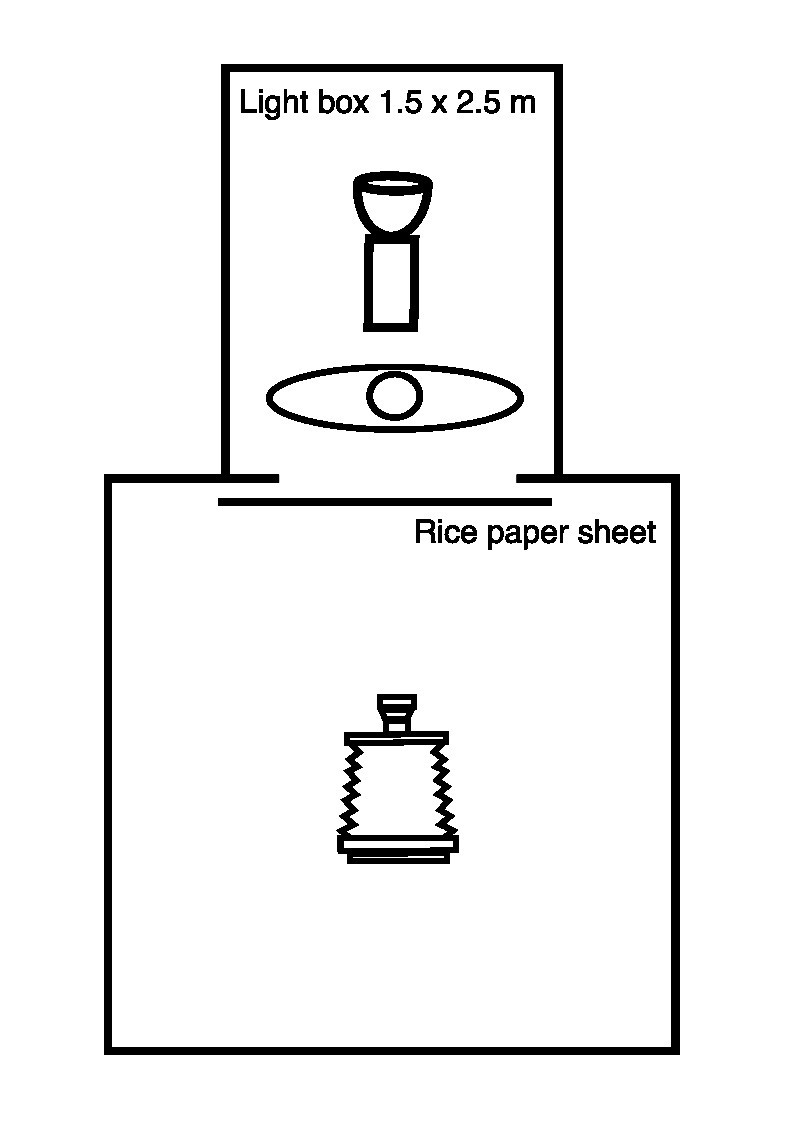
Instead of pointing the lamp directly at the subject, aim it toward the back wall. The light then reaches the subject indirectly, arriving from multiple angles after reflecting off surrounding surfaces. By placing additional reflective panels around the space, you can further shape and multiply these secondary light paths, building layered shadows with subtle variations in density and edge.
Distance is critical. Leave enough space between the model and the shoji screen (or background panel) so that the reflected light has room to diverge. This separation allows individual shadows to detach, overlap, and remain legible, rather than collapsing into a single dark silhouette.